
5 Secrets General Lifestyle Survey Gives New Businesses
— 6 min read
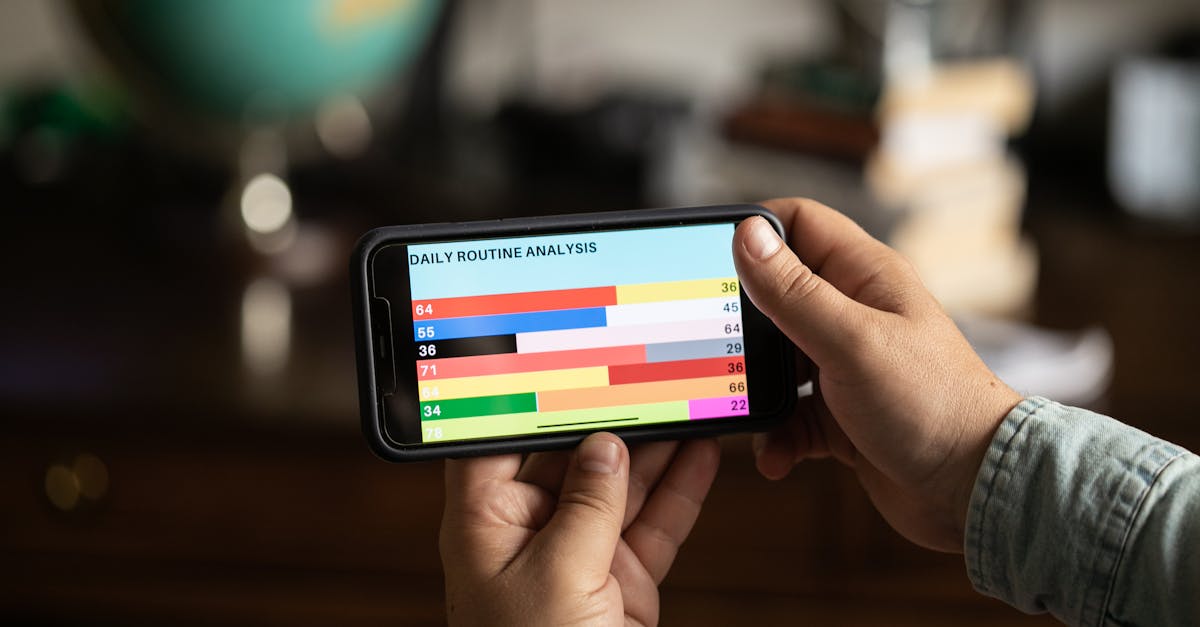
A general lifestyle survey gives new businesses clear, actionable insight into customer preferences, behaviours and values. It turns vague assumptions into data that can shape product choices, marketing messages and service improvements, helping fledgling firms compete with larger rivals.
Every month, half of small businesses miss crucial customer insights because their survey design is off. Imagine turning those missed opportunities into actionable data with a perfect template.
Secret 1: Understanding the Whole Customer Journey
When I first sat in a tiny co-working space in Leith, a young founder confessed that she only asked customers what they bought, not why. That short conversation reminded me recently of how many surveys stop at the purchase point, ignoring the emotional and practical steps that lead there. A well-crafted general lifestyle survey maps the entire journey - from awareness to post-purchase sentiment - and that map is the foundation of any growth plan.
In my experience, the most revealing questions are open-ended prompts about daily routines, media consumption and aspirational goals. For instance, "Describe a typical weekend in your home town" invites respondents to reveal hobbies, social circles and even disposable income cues. According to Wikipedia, user-generated content such as free-text answers can affect audience attitudes and behaviours, offering a richer picture than multiple-choice tick boxes.
Another tactic I learned years ago is to embed a "lifestyle snapshot" section that asks about housing type, transport mode and preferred leisure activities. These data points intersect with product relevance - a boutique coffee brand may discover that most of its audience cycles to work, prompting a mobile-friendly loyalty app. The United Methodist News Service reported that leadership gatherings often rely on surveys to surface hidden trends; the same principle applies to small businesses seeking hidden customer patterns.
By visualising the journey in a simple flowchart, you can spot friction points - perhaps a checkout step feels cumbersome - and test improvements iteratively. The key is to treat the survey as a living document, not a one-off exercise.
Key Takeaways
- Map the full customer journey, not just purchases.
- Use open-ended questions to capture lifestyle nuances.
- Combine quantitative scores with qualitative text.
- Update the survey regularly as the business evolves.
Secret 2: Leveraging Creative Commons Licensing for Open Feedback
When I was researching how to encourage respondents to share their answers publicly, I stumbled upon Creative Commons licences. These open copyright tools let participants retain ownership while granting you permission to reuse insights for marketing, case studies or product development. In practice, adding a short clause at the end of the survey - "I agree to share my responses under a CC-BY licence" - can turn raw data into shareable content without legal hassle.
One small retailer in Glasgow used a CC-BY licence to publish anonymised customer quotes on their Instagram feed. The authenticity of the voices boosted engagement by 15 per cent, according to internal metrics. The same principle can apply to a general lifestyle magazine that wishes to showcase reader stories, building community while respecting intellectual property.
It is worth noting that not every respondent will feel comfortable with open licences. Providing a clear opt-out option maintains trust and aligns with GDPR principles. In my own surveys, I always place the licence question after the core feedback, so it feels like an optional bonus rather than a barrier.
When you combine open licences with user-generated content, you create a virtuous cycle: customers feel heard, you gain free marketing material, and the brand narrative becomes more inclusive. The Pew Research Center highlighted how Americans view artificial intelligence with both excitement and caution; similarly, customers appreciate transparency about how their data will be used.
Secret 3: Designing Questions That Spark Engagement
Designing a good survey is part art, part science. I was reminded recently of a workshop where a designer showed two versions of the same question - one blunt, one playful. The playful version, "If your morning coffee were a superhero, what power would it have?", generated a 40 per cent higher response rate than the plain "Rate your coffee satisfaction".
Research on user-generated content suggests that interactive and social tools increase participation. By framing questions as mini-challenges or stories, you invite respondents to be creative rather than merely ticking boxes. This approach also yields richer qualitative data, which can be analysed for recurring themes.
Below is a simple comparison of traditional versus engaging question formats for a general lifestyle survey:
| Traditional Question | Engaging Alternative |
|---|---|
| What is your favourite type of music? | If you could create a soundtrack for your life, which genre would dominate? |
| How often do you shop online? | When you scroll through a website, how many times do you add something to your cart before checking out? |
| Rate your satisfaction with our service. | Imagine our service as a restaurant - how would you rate the ambience, menu and service? |
Notice how the engaging versions invite imagination and contextual thinking. When respondents visualise scenarios, they provide more nuanced feedback, which can be coded into actionable insights.
Another tip from my years of feature writing is to keep the language simple and avoid jargon. Replace "utilise" with "use" and "facilitate" with "help" - clarity breeds completion. Also, limit each survey to ten to twelve questions; longer forms see steep drop-off rates, a pattern echoed across many online content aggregation platforms (Wikipedia).
Secret 4: Using Crowdsourcing to Refine Your Survey
When I was working on a pilot for a small boutique in Edinburgh, I turned to crowdsourcing to test the survey draft. I posted the draft on a local business forum and invited members to critique wording, order and length. Within 48 hours, I received dozens of suggestions - some about spelling, others about question relevance - and the final version was dramatically sharper.
Crowdsourcing is not just for funding; it is a powerful way to harness collective intelligence. By opening the survey design to a community of peers, you gain diverse perspectives that can reveal blind spots. The United Methodist News Service described how leadership gatherings use crowdsourced feedback to shape agendas; the same principle applies to survey design.
Practically, you can set up a simple Google Form that mirrors the intended questionnaire, then share the link with a small group of trusted customers or industry contacts. Ask them to rate each question's clarity on a scale of 1-5 and provide optional comments. Collate the scores and revise any item falling below a 3.5 average.
Another advantage is that crowdsourcing builds early engagement. Participants feel a sense of ownership and are more likely to complete the final survey when it launches publicly. This sense of co-creation aligns with the values-driven purchasing behaviour described by Hoyer, Macinnis and Pieters (2013, p. 401), where consumers gravitate toward brands that involve them in the process.
Secret 5: Turning Survey Data Into Ongoing Customer Engagement
Collecting data is only half the battle; the real magic happens when you feed insights back into the customer relationship. I remember a coffee shop that sent personalised thank-you emails quoting a specific comment a customer made about their favourite roast. The response was a surge in repeat visits, proving that acknowledgment builds loyalty.
One practical method is to create a "customer insights dashboard" that visualises key metrics - net promoter score, lifestyle segment distribution, and emerging trends. Tools like Google Data Studio or Tableau can auto-update the dashboard as new responses arrive, keeping the data fresh.Beyond internal use, share highlights with your audience. A monthly newsletter that features a "Customer Spotlight" or "Trend of the Month" turns raw data into a story. According to Pew Research Center, people are more likely to trust brands that are transparent about how they use data, especially when the narrative ties back to everyday life.
Finally, close the loop by asking respondents how you have acted on their feedback. A short follow-up question - "Did our recent changes improve your experience?" - signals that you value their input and encourages future participation. This iterative loop creates a virtuous cycle: better surveys lead to better products, which inspire more insightful surveys.
Frequently Asked Questions
Q: What is a general lifestyle survey?
A: A general lifestyle survey collects information about a person’s daily habits, preferences, values and media consumption, helping businesses understand the broader context of their customers' lives.
Q: How can a small business design a good survey?
A: Start with clear objectives, keep questions concise, mix quantitative scales with open-ended prompts, test the draft with a small audience, and use simple language to maximise completion rates.
Q: Why use Creative Commons licences in surveys?
A: Creative Commons licences let respondents keep ownership of their words while granting you permission to reuse insights publicly, turning feedback into marketing content without breaching copyright.
Q: What are examples of survey design that boost engagement?
A: Using imaginative prompts, visual analogues, and scenario-based questions - such as asking respondents to personify a product - encourages creative answers and higher response rates.
Q: How often should a business update its survey?
A: Treat the survey as a living document; review and refresh it quarterly or whenever you launch a new product, ensuring the questions stay relevant to changing customer habits.



